
“My advice for people, especially when you’re homeless, is to love yourself deeply, even when you feel bad.”
A note from Shelters of Saratoga:
One of the most rewarding parts of our work is hearing from former guests and learning where life has taken them since their time at SOS. We love when someone reaches out to share an update—and to reflect on what SOS meant to them along the way.
Corey came to SOS in 2019 during a challenging chapter of his life. Recently, we had the opportunity to catch up with him, hear how he’s doing today, and look back on the journey that helped get him here.
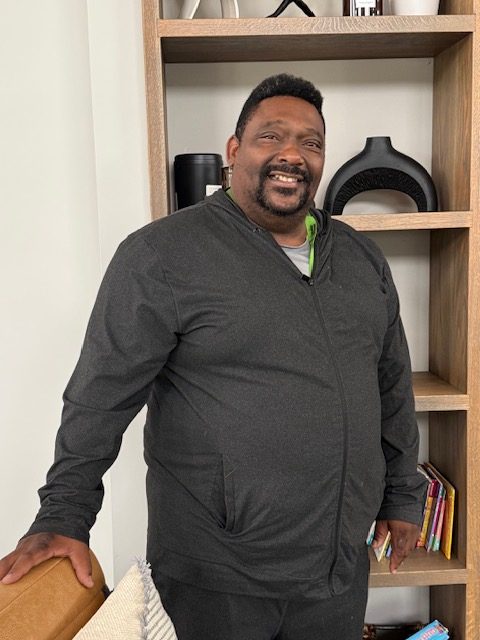
“I got out of the pits of hell.”
For Corey, those words carry the weight of a journey that spans more than 20 years—through addiction, homelessness, broken relationships, and uncertainty, but also through hard work, education, recovery, and ultimately, a new beginning.
Today, Corey is a former Shelters of Saratoga Emergency Shelter guest, a college graduate, and a powerful example of what can happen when determination meets the right support.
But getting here was anything but easy.
After an 11-year relationship ended, Corey moved out of the home he had shared with his family. The breakup left him emotionally vulnerable and unsure of what came next.
“I became more vulnerable… looking for ways to handle the pain,” Corey remembers. “Just reckless. I thought I was invincible.”
He briefly moved in with his mother, but after years of living independently, adjusting to being back under a parent’s roof was difficult. Eventually, Corey found a place of his own.
Although he was working two jobs, managing his finances was a struggle. Budgeting was something he had never really learned, and emotionally, he wasn’t in a place to make the decisions he knew he needed to make.
“Even though I knew what to do, if you’re not in it mentally or emotionally, you won’t do it.”
When Corey couldn’t keep up with rent, he moved. Then he moved again.
“I moved to another place after not paying the rent. And then another place. Homelessness is just around the corner now. From this pattern of moving around and moving to bad places, I met bad company…”
By 2004, Corey had become involved with drugs, and by 2005, he was experiencing homelessness.
Corey describes addiction as something he once fundamentally misunderstood.
“I always thought addiction was a moral issue, but it’s not.”
He remembers almost immediately realizing that using drugs wasn’t worth what came with them.
“The depression was instant, and it was so deep and cold. I told myself, I won’t do this again, but I didn’t know better… I keep thinking, why do I keep doing this? No matter the consequences, I still went back. But that’s what addiction is.”
Over the years, Corey sought help through different programs, including faith-based agencies. He wanted to stop. Walking away, however, wasn’t as simple as wanting it badly enough.
“I truly wanted to stop. I didn’t think the buzz was worth the consequences, even the second time I used. I just wanted to walk away from it, but it tells you when to leave, I guess, and it took 20 years.”
In 2019, Corey turned to Shelters of Saratoga’s Emergency Shelter for support.
After years of moving between places and programs, Corey says he noticed something different almost immediately when he walked through the doors at SOS.
“I saw a difference before I was there for even an hour.”
He had experienced shelters and programs that felt institutional and impersonal. SOS didn’t feel that way.
Instead, Corey found staff who were present and accessible, resources located directly within the shelter, a computer he could use for college coursework, fresh food guests could prepare, and a community where people looked out for one another.
He remembers football Sundays, sharing meals, making friends, and the sense that the shelter operated more like a family than an institution.
“You people care—genuinely, really care.”
Corey wasn’t waiting for his circumstances to change before moving his life forward.
While staying at SOS, he worked at the University at Albany and attended college at the same time.
Work was more than a paycheck.
“I’d come back from work with food and share it with others. I felt great. At work, I had a name, I paid taxes, I had an identity.”
That sense of identity mattered to Corey because homelessness had shown him how quickly people can stop seeing the person behind the circumstances.
Some friends distanced themselves from him while he was homeless. Corey felt as though they could no longer separate who he was from what had happened in his life.
“I’m still the same person, but they can’t separate that. They think that I am what I did.”
His experience changed the way he thinks about judgment and compassion.
“You’re not trash. You still can do something. People still need you. Don’t throw yourself away.”
At SOS, Corey continued showing up—for work, for school, and for himself.
And this year, he graduated from college.
Corey credits SOS staff, including Marcus, Natalie, and Allison, with going above and beyond to help him move forward. The support wasn’t about doing the work for him. It was about making sure he didn’t have to do it alone.
“SOS walks side-by-side. They lift you up when you’re down; they really do.”
Through his time at the shelter, Corey was able to connect with resources that helped him build stability, including SNAP, Medicaid, and a Section 8 housing voucher.
He doesn’t see accepting assistance as something to be ashamed of.
“There is money and resources out there to help you succeed. I went to school, got Section 8, I got SNAP, I got Medicaid. This isn’t stuff you want to be on forever, but so what? If you need it now, it’s a life jacket.”
Eventually, the day Corey had been working toward arrived: he had a place of his own.
SOS staff brought him to his new home with the keys. Allison made sure he had some of the essentials he would need, including a coffee maker, pots, and pans. Staff helped set up the apartment before he moved in.
After years of bouncing from place to place, Corey wasn’t simply leaving shelter.
He was going home.
Corey’s story isn’t one of overnight transformation. It’s a story of patience.
It’s about continuing to do the work while experiencing homelessness, accepting help when help is needed, staying focused when progress feels slow, and understanding that a setback doesn’t erase a person’s value or potential.
“If you’re homeless, you gotta make the best of where you’re at. You gotta stay productive, be proactive, keep it positive so you can move forward. It might take you some time, but you’ll get it.”
He also has advice for those currently staying in shelter: be patient—with yourself, with the process, and with the people trying to help.
“Give yourself a break. Give the SOS staff a break. It’s not easy taking care of 20, 30, 40, 50 people. The work is being done. Count your blessings.”
Today, Corey has stable housing, is a proud college graduate, and hopes to own his own mobile food service business one day soon. The uncertainty of homelessness doesn’t disappear from a person’s memory the moment they receive a set of keys, but Corey has learned to keep moving forward.
“Do more good. Plant more seeds in your life.”
And for anyone who finds themselves where he once was, Corey wants them to know that accepting help isn’t giving up. It can be the first step toward getting your life—and your sense of dignity—back.
“My advice for people, especially when you’re homeless, is to love yourself deeply, even when you feel bad. Fight for yourself. Don’t be embarrassed to go after the help you need.”
His message about SOS is even simpler:
“You want a new start at life and your dignity back? Go to SOS.”
Thank you Corey for sharing your story. SOS helped me in similar amazing ways years ago. Blessings on your journey!